


Over the past several months, Penny Lane Centers’ Lancaster programs have continued to strengthen collaboration across Prevention and Aftercare, Foster Family Agency (FFA), the Outpatient Clinic, Transitional Age Youth (TAY), ECM, SUD, and the Community and Family Resource Center (CFRC). While each program serves a different purpose and population, our teams share one important goal: ensuring that children, youth, and families have access to the support and resources they need to thrive.
Increased communication and collaboration among programs have created more opportunities for staff to connect families with services beyond their own program. Rather than working independently, teams are becoming increasingly familiar with the resources, expertise, and support available throughout Penny Lane. A family connected to one program may have needs that can be addressed by another, and stronger relationships among staff make those connections easier, faster, and more meaningful.
This collaboration also extends beyond formal referrals. Programs are sharing information about community resources, events, workshops, and other opportunities that may benefit the families we serve. Staff can consult with one another, identify additional resources, and work together when the needs of a child, youth, or family extend across traditional program boundaries.
The Community and Family Resource Center has provided another important opportunity to strengthen these connections by serving as a resource not only for community members, but also for families already connected to Penny Lane services. Similarly, the expertise available through the Clinic, TAY, Prevention and Aftercare, and our other Lancaster programs allows each team to contribute something unique to the larger network of care and support.
Perhaps most importantly, this growing collaboration reflects a shared understanding that families do not experience their needs in separate categories. A family may simultaneously need behavioral health support, concrete resources, parenting assistance, community connections, substance use services, or help navigating a major life transition. By strengthening relationships across programs and sharing our collective knowledge, we are better positioned to respond to the whole family rather than focusing on a single need.
There is always more we can do to strengthen these partnerships, but the increased communication, resource sharing, and willingness to work across programs represent meaningful steps forward. Every connection made between colleagues has the potential to create another connection to care for a child, youth, or family. As collaboration continues to grow throughout Lancaster, so does our ability to ensure families experience Penny Lane not as a collection of separate programs, but as one team and one connected community of support—ready to do whatever it takes.
-Charito Guerrero, Penny Lane Centers
If you are interested in sharing your own stories of collaboration, please email Charito Guerrero at cguerrero@pennylane.org. We are always looking for opportunities to highlight the great work happening across our many programs.
When colleague Jake Walker asked whether Penny Lane might do something to remember Dolly Parton following her passing, I have to admit—I had not thought about it.
But then Jake pointed out something that stayed with me. He saw a connection between Dolly Parton’s life and the work we do at Penny Lane. And the more I thought about it, the more I realized he was right.
There are a lot of Dollys at Penny Lane.
Dolly Parton’s story is remarkable. She grew up in poverty in the mountains of East Tennessee, one of 12 children, and experienced hardship from an early age. Yet she never seemed to let where she started determine where she would go. She became one of the world’s most recognizable entertainers, but perhaps even more remarkable than what she accomplished is what she chose to do with her success.
Dolly never forgot where she came from.
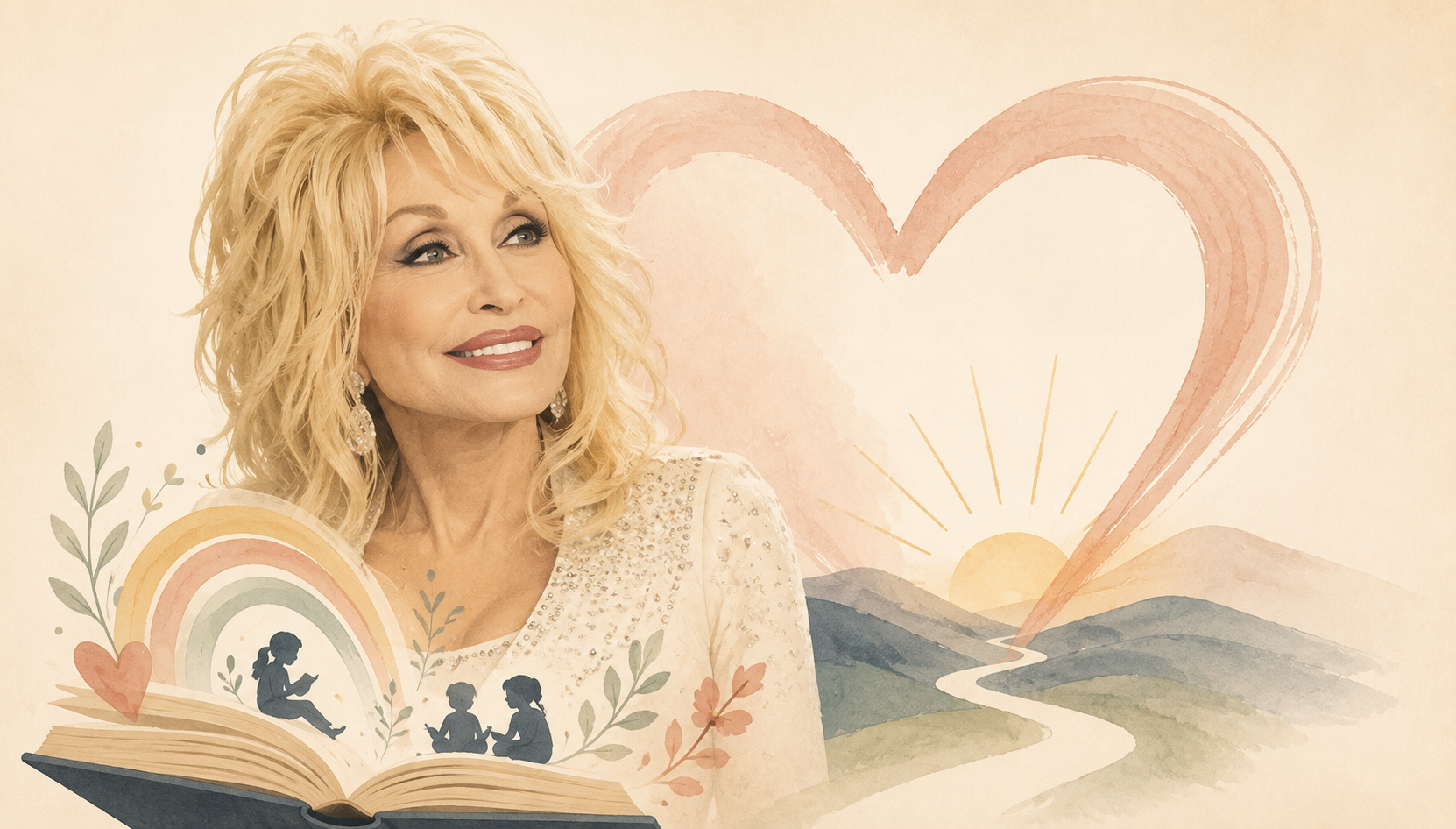
Her philanthropy was deeply personal. In 1995, she created Dolly Parton’s Imagination Library, inspired in part by her father’s inability to read and write. What began as an effort to provide books to children in her home county grew into an international program that has placed hundreds of millions of books into the hands of children.
That part of Dolly’s story immediately made me think of Penny Lane’s Book Nook.
A book can seem like a small thing. But a book can also be an invitation—to imagine, to learn, to dream, and to see a world beyond the one immediately in front of you. Dolly understood that. And so do we.
But there is another connection between Dolly and Penny Lane that may be even more important.
Dolly had a way of bridging gaps.
She seemed to understand that people do not have to agree with one another, come from the same place, have the same beliefs, or live the same lives to deserve kindness and respect. She did not seem particularly interested in asking, “Are you one of us?” Instead, she had a remarkable ability to see the worth in people.
Throughout her life, Dolly often spoke about her faith alongside her belief in loving and accepting others rather than judging them. She understood something both simple and powerful: we all want to be loved, accepted, and valued—and one of the greatest things we can do is extend that same grace to someone else.
That sounds a lot like Penny Lane to me.
We work with people who come from different places, different families, different cultures, and different circumstances. Some have experienced unimaginable hardship. Some are still trying to find their way. Some may not look like us, think like us, believe what we believe, or live the lives we have lived.
But we believe that every person has worth.
We believe circumstances do not define a person’s potential. We believe people can heal, grow, change, dream, and become more than what their circumstances might suggest. And we believe our job is not to judge someone for where they are, but to meet them there and help them discover where they might go next.
That is what Jake meant when he said, “I think we see a lot of Dollys here at Penny Lane.”
He is right.
Not because we expect the children, youth, families, and staff we encounter to become famous or extraordinary by the world’s definition of success. But because every day, we see people who have faced difficult beginnings and continue to find ways forward.
We see resilience.
We see creativity.
We see humor and hope.
We see people who have been through hard things and still find a way to care about someone else.
And sometimes, we get the privilege of helping someone see possibilities in themselves that they could not see before.
Dolly hoped to be remembered as someone who made a difference. Her legacy suggests that she understood something important: success is not only about what you accomplish. It is also about what you do with what you have been given.
That is another lesson Dolly leaves with us.
We do not all have a platform like hers. We do not all have millions of dollars to give away. We do not all have an Imagination Library.
But every one of us has the ability to make someone feel seen.
To make room.
To bridge a gap.
To offer kindness instead of judgment.
To give someone a book, an opportunity, a second chance, a listening ear, or simply the message: You matter.
Maybe that is what collaboration looks like at its most human. It is recognizing that none of us has to do everything, but every one of us can do something. We can share what we have, connect someone to what they need, open a door, offer encouragement, or simply choose compassion when judgment would be easier.
And that is why Jake’s observation resonated so deeply.
There really are a lot of Dollys at Penny Lane.
They are the people we serve who refuse to let difficult beginnings define their futures. They are the staff members who show up every day believing in someone else’s potential. They are the colleagues who reach across programs to help a family find what they need. And they are all of us, whenever we choose to use what we have been given to make life a little better for someone else.
Dolly Parton leaves behind an extraordinary legacy of music, generosity, humor, faith, acceptance, and hope. But perhaps one of the best ways we can honor that legacy is remarkably simple: see the worth in people, remember where you came from, give what you can, and leave things a little better than you found them.
There are a lot of Dollys at Penny Lane.
And every day, from 9 to 5, we have the opportunity to be one.


