


September 2026
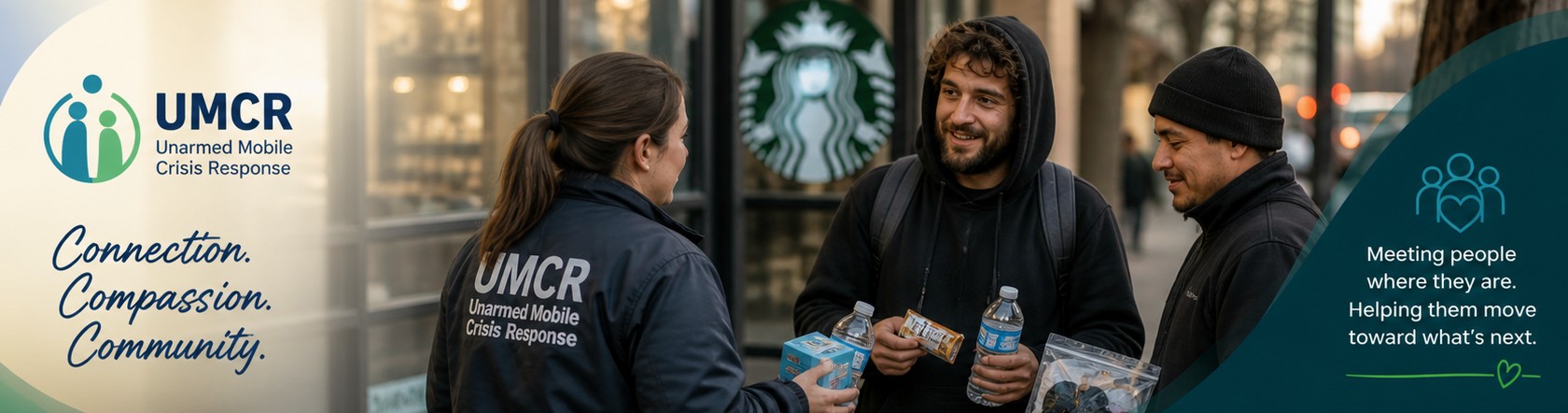
Penny Lane Centers’ Unarmed Mobile Crisis Response (UMCR) team was recently called to a local business regarding “Ken,” an individual who was reportedly upset and making verbal statements about vandalizing the location. When the team arrived, they found Ken walking back and forth through the vehicle entrance and exit area of the shopping complex. With customers and cars moving throughout the area, staff expressed concern for his safety and wanted to ensure the situation did not escalate.
Rather than focusing solely on the behavior that prompted the call, the UMCR team approached Ken calmly and worked to understand what was happening from his perspective. Ken explained that he was trying to find his mother, who had gone inside the store, but security would not allow him to enter to look for her. The team gave Ken space to express his concerns, listened to what he was experiencing, and began offering practical options that could help address his immediate needs while moving him away from the busy vehicle traffic.
UMCR offered to walk with Ken to a nearby business where he could wait in a safer environment. The team also offered the use of their phone so he could try to contact his mother or another person he trusted. Ken provided several phone numbers, and after making calls, UMCR was able to successfully connect him with someone from his existing support system. That individual spoke with Ken and helped the team redirect the conversation and work toward a positive resolution.
Throughout the interaction, Ken moved through periods of increased and decreased agitation, but the UMCR team remained patient, calm, and engaged. Instead of rushing the interaction, team members continued providing reassurance, redirection, and choices that allowed Ken to remain involved in deciding what happened next. With continued support, Ken eventually agreed to walk with the team to a nearby Starbucks, where he could get something to eat and safely wait for his mother.
Not long afterward, an older woman exited the store, and Ken immediately confirmed that she was his mother. She explained that she and Ken relied on public transportation and planned to walk together to a nearby bus stop. UMCR remained on scene until Ken and his mother safely left the shopping complex together, bringing the interaction to a peaceful conclusion.
What began as a call involving concerns about agitation and possible property damage ultimately became an opportunity for connection, support, and problem-solving. By taking the time to understand what Ken needed, providing practical options, helping reconnect him with a trusted support, and remaining present through moments of heightened emotion, the UMCR team helped de-escalate the situation without further incident.
This interaction is a powerful example of the value of meeting people where they are. Sometimes the path from crisis to calm begins with something as simple as listening, offering choices, addressing an immediate need, and helping someone reconnect with the people they trust. Through patience, compassion, and teamwork, UMCR was able to support Ken while also helping maintain safety for him and the surrounding community.
September 2026
Sometimes a successful crisis response requires more than addressing an immediate need—it requires persistence, collaboration, and a commitment to staying connected until a path forward can be found. Penny Lane Centers’ Unarmed Mobile Crisis Response (UMCR) team recently demonstrated exactly that while supporting an individual experiencing an extremely vulnerable and dangerous situation.
Earlier in the day, UMCR responded to a call involving a recipient seeking emergency shelter due to domestic violence. During the initial response, the team identified additional concerns suggesting that the individual might also be experiencing sex trafficking. Recognizing the seriousness of the situation and the need for specialized support, the team created a follow-up so the night shift could continue trying to connect with her and help identify a safe placement.
Throughout the evening, the night team made numerous attempts to reach the recipient, leaving messages encouraging her to reconnect with UMCR. In their final message, the team instructed her to call 911 and specifically request UMCR so they could continue supporting her. At the same time, team members began reaching out to community partners and specialized service providers, including Rainbow Services, Sojourn, WINGS, and the Coalition to Abolish Slavery and Trafficking (CAST), searching for an organization that could provide the emergency assistance she needed.
After several calls, CAST was able to assist with emergency placement. Meanwhile, the recipient received UMCR’s messages and followed the team’s instructions, calling 911 and requesting to reconnect with UMCR. Once the team was able to meet with her again, they confirmed that she was experiencing both domestic violence and sex trafficking. UMCR provided information about CAST and gave her the time and space to contact the organization’s hotline and begin the assessment process.
While the recipient waited for CAST to identify a safe placement, UMCR continued addressing her immediate needs. The team allowed her to charge her phone in the UMCR vehicle so she could remain connected with the people working to assist her. Knowing that both she and her dog needed food, the team also transported them to a local grocery store where she could purchase food and other necessities while waiting for the shelter placement process to be completed.
Most importantly, UMCR stayed with her throughout the process. Rather than simply providing a phone number or referral and ending the response, the team remained present while CAST completed the assessment, located an appropriate confidential placement, and arranged transportation. Once transportation arrived, UMCR assisted the recipient with gathering and loading her belongings and making sure that she and her dog were safely prepared to leave.
The call ended with the recipient and her dog being transported to a confidential safe location coordinated by CAST, where she could access additional stabilizing services and support, including assistance with housing, health care, mental health services, and other resources designed to help survivors move toward greater safety and stability.
This response demonstrates the importance of continuity of care and strong community partnerships in crisis work. From the initial UMCR team recognizing that additional support might be needed, to the night team repeatedly attempting to reconnect with the recipient, to multiple organizations being contacted in search of emergency placement, every step helped move the situation closer to a safe resolution.
Sometimes success is found in refusing to give up when the first call goes unanswered or the first resource is unavailable. Through persistence, compassion, resourcefulness, and collaboration, UMCR helped ensure that someone facing an incredibly difficult situation was not left to navigate it alone. What began as a request for emergency shelter ultimately became a pathway to safety, specialized support, and an opportunity to begin moving forward.
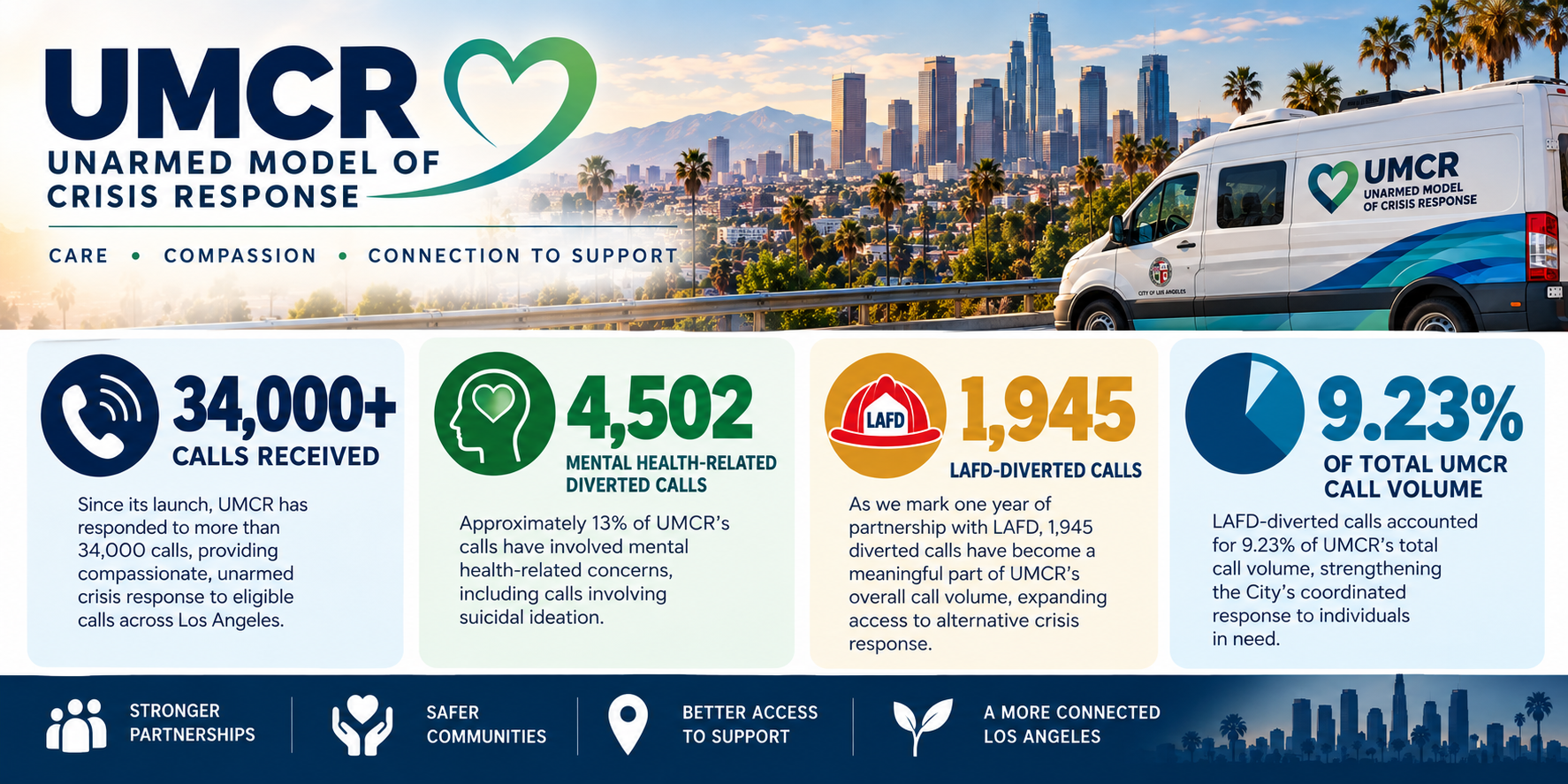
Penny Lane Centers’ Unarmed Model of Crisis Response (UMCR) continues to demonstrate how a compassionate, community-based response can make a meaningful difference for Angelenos experiencing a crisis. Since its launch, UMCR has responded to more than 34,000 calls, with approximately 13% involving mental health-related concerns, including individuals experiencing suicidal ideation. Through trained, unarmed crisis responders, UMCR provides eligible callers with an alternative response centered on care, compassion, de-escalation, and connection to appropriate support and resources.
Partnerships with the Los Angeles Police Department (LAPD) and Los Angeles Fire Department (LAFD) continue to play an important role in expanding this work. September marked one year of partnership with LAFD, and during that time, 1,945 LAFD-diverted calls accounted for 9.23% of UMCR’s total call volume. UMCR has also responded to 4,502 mental health-related diverted calls, demonstrating the significant role unarmed responders can play when an individual’s needs may be better addressed through crisis intervention and connection to care rather than a traditional emergency response.
One recent LAPD field diversion showed exactly what this collaboration can look like in action. An officer responding to a call involving an older adult experiencing confusion recognized that the individual’s needs extended beyond a traditional law enforcement response and connected the client with UMCR. The UMCR team then worked with the individual, caregivers, family members, and neighbors to better understand what was happening, identify immediate needs, and develop a safety plan so the client would not be left alone overnight. The team also reviewed existing resources with the family and discussed additional long-term care and support that could help moving forward. The diversion allowed the officer to return to service for higher-acuity calls while ensuring the individual remained connected to appropriate support.
At the same time, conversations are continuing across the City about the future of unarmed crisis response and how programs like UMCR can become even more coordinated and accessible. City partners have been exploring ways to improve dispatch and referral processes, strengthen handoffs between programs, reduce fragmentation, and provide greater continuity of care for individuals experiencing a crisis. As UMCR continues to grow, the goal remains simple but powerful: connect people with the response that best meets their needs in that moment, protect their dignity, and help create a pathway from crisis to care and support.


