


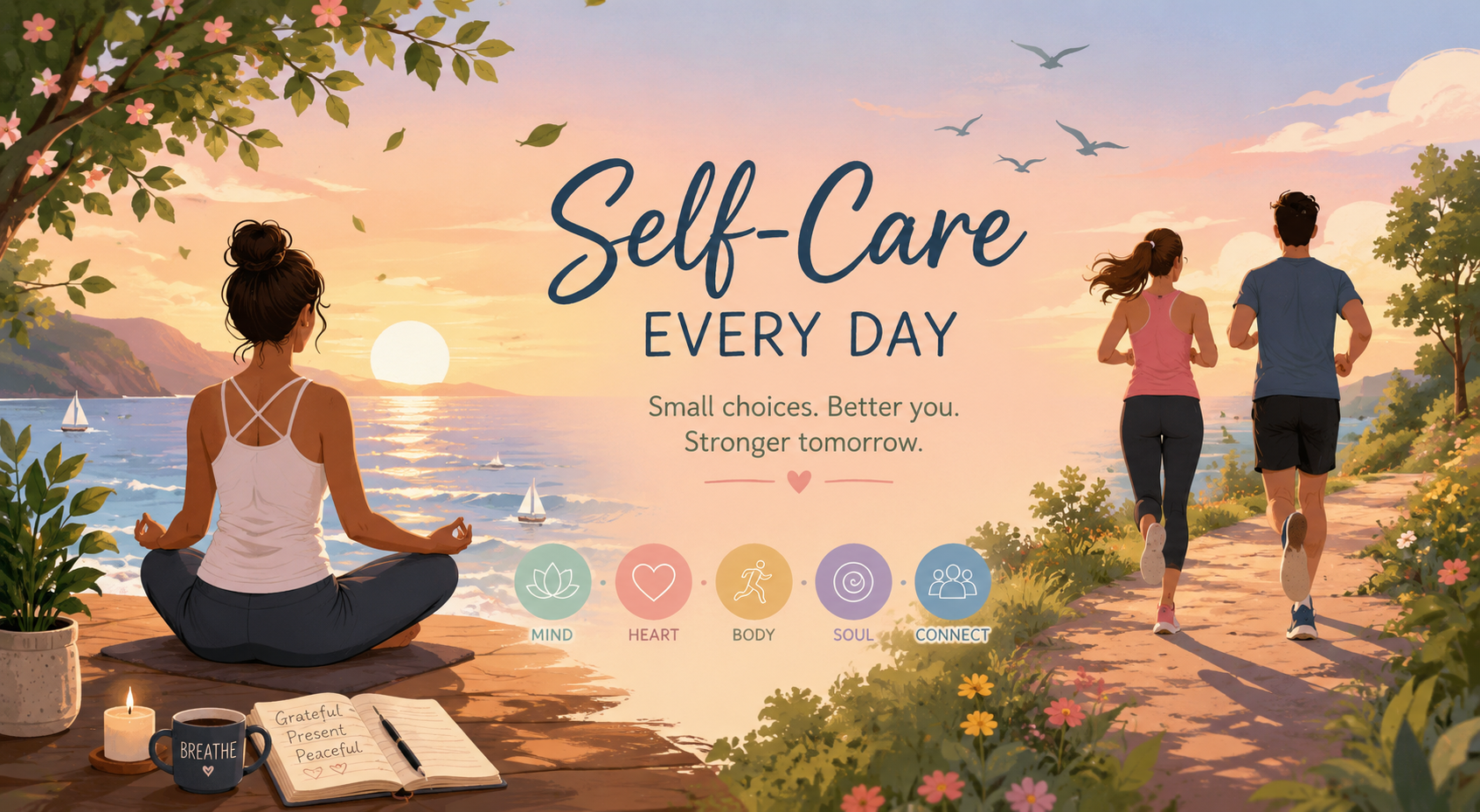
June often brings a shift in energy. As summer approaches and calendars fill with vacations, family gatherings, celebrations, and work responsibilities, it can be easy to put our own needs on the back burner. Throughout the year, our Wellness Corner has focused on building healthy habits, managing stress, preventing burnout, and creating space for personal growth. This month, we’re taking a closer look at one of the most important foundations of overall well-being: self-care. While self-care is often thought of as an occasional treat or luxury, it is actually an essential practice that helps us stay balanced, resilient, and healthy in our daily lives.
Finding a balance in life can be difficult, like most things, it takes time, intention, and effort. It’s easy to get caught up in the events of your daily life – juggling work, family, pets, and personal responsibilities, causing you to forget to find time (or make time) for yourself. But taking that time is crucial for your overall well-being; and that’s where self-care comes in.
Self-care is any activity you do deliberately to preserve or improve your physical, mental, and emotional health. Self-care involves engaging in daily habits and routines that not only bring you joy and relaxation, but also reduce stress, manage illness, and maintain health. Self-care is linked to positive outcomes; studies show self-care routines increase happiness by 71%, productivity by 67%, and confidence by 64%. It is essential for mental health because it helps reduce stress, improve mood and increase overall wellbeing. This in turn ensures you are equipped to handle life's challenges and juggle work, family, pets and personal responsibilities.
Self-care can also prevent burnout, a state of severe physical, emotional, and mental exhaustion caused by prolonged or unmanaged stress. A recent analysis showed 55% to 74% of the workforce experiences burnout; with younger workers (Gen Z and younger millennials) being more susceptible with 83% experiencing burnout. But it’s not all doom and gloom because by practicing self-care, you can recharge and replenish your energy, making you more resilient to stress.

There are different types of self-care including: physical self-care, emotional self-care, social self-care, and spiritual self-care.
Physical self-care involves taking care of your body through activities that get your blood flowing and your heart racing. You can attend a yoga class or a fitness class like water aerobics or kickboxing (or Tae Bo if you want to relive the 90’s). Movement is key – go for walk/hike in nature, dance (like no one’s watching), ride a bike, or rollerblade. Even doing simple stretches can get your blood flowing. Cook a healthy meal, eat a balanced diet that includes fruits and vegetables; and drink enough water. Treat yourself to lunch in the park or the beach (if you’re lucky). And always do your best to keep a consistent sleep schedule.
Emotional self-care involves acknowledging and expressing your emotions in a healthy way. You can journal about your thoughts and feelings, or if you’re more artistic – draw, paint, compose a song, play an instrument – get your creativity flowing. Take a break from technology and social media (those Tik Tok videos will still be there tomorrow). If you need a little extra support, don’t be afraid to seek professional help; you can always talk to a therapist. You can even take advantage of our EAP for free therapy sessions.
Social self-care involves nurturing relationships with friends and loved ones and engaging in activities that bring you joy. Spend some quality time with family and friends – go see a movie, play board games together, eat dinner together, or go out for a coffee. Do something as small as checking in with a quick text to something as big as planning a trip.
Spiritual self-care involves connecting with your inner self and finding meaning and purpose in life. You can meditate, practice yoga, pray, go for a sound bath, or take some deep breaths.
Now that we know what self-care is, we can talk about how to incorporate it into our daily routines.
Self-care doesn't have to be complicated, expensive, or time-consuming. It begins with small, intentional choices that prioritize your physical, emotional, social, and spiritual well-being. Whether it's taking a walk, setting healthy boundaries, spending time with loved ones, or simply giving yourself permission to rest, every act of self-care is an investment in your health and happiness. As we move into the summer months, challenge yourself to make self-care a regular part of your routine rather than an afterthought.
Remember: you cannot pour from an empty cup, and taking care of yourself is one of the best ways to ensure you can continue showing up for the people and responsibilities that matter most.
-Joaquin Castro, Penny Lane Centers


