

Understanding What's Ahead and How We Can Help Protect Access to Care
At Penny Lane Centers, collaboration is at the heart of everything we do. Whether we're connecting families with community resources, working alongside partner organizations, or helping individuals navigate complicated systems, we know that meaningful support often begins with sharing information and working together.
This month, our Collaboration Corner focuses on an important issue that could affect many of the children, youth, and families we serve: upcoming changes to Medi-Cal under federal legislation known as H.R. 1. As California prepares to implement new eligibility requirements, more frequent renewals, and changes affecting certain immigrant populations, staying informed and connected to reliable resources will be more important than ever.
For many Penny Lane families, Medi-Cal is a lifeline, providing access to medical care, mental health services, medications, and other essential supports. Understanding these changes and helping families prepare is one way we can continue our commitment to removing barriers and ensuring individuals have access to the care they need.
Several significant changes are scheduled to take effect over the coming months, and while not everyone will be affected, it's important that our staff and families understand what may be ahead.
1. New Work and Community Engagement Requirements
Beginning January 1, 2027, certain adults between the ages of 19 and 64 will be required to meet new work or community engagement requirements to qualify for or maintain their Medi-Cal coverage.
Depending on their circumstances, individuals may satisfy these requirements through employment, education, job training, volunteering, or a combination of qualifying activities. Generally, the requirement involves 80 hours of qualifying activity per month, although certain income thresholds and educational participation may also qualify.
Importantly, these requirements do not apply to everyone. Children, pregnant individuals, parents and caregivers of children age 13 and younger, people with disabilities, and individuals with certain serious health conditions are among those who may qualify for exemptions.
California has requested a delay in implementing these requirements, so families and staff should continue monitoring official updates.
2. More Frequent Medi-Cal Renewals
Beginning March 1, 2027, certain adults will be required to renew their Medi-Cal eligibility every six months instead of once a year.
This means staying on top of renewal notices, responding to requests for information, and keeping contact information current will become even more important. Missing a deadline or overlooking paperwork could result in an interruption of coverage, even for individuals who otherwise remain eligible.
3. Changes Affecting Immigration-Related Eligibility
Changes to Medi-Cal eligibility based on immigration status began in October 2026, with additional changes expected in 2027.
Some individuals may experience changes to their eligibility, funding source, or how they receive healthcare services. Because these rules are complex and depend on individual circumstances, families should seek guidance from their county Medi-Cal office or a qualified benefits specialist before making decisions about their coverage.
For many of the families Penny Lane serves, navigating public assistance programs can already be overwhelming. Language barriers, transportation challenges, demanding work schedules, limited access to technology, and competing family responsibilities can make it difficult to keep up with changing requirements.
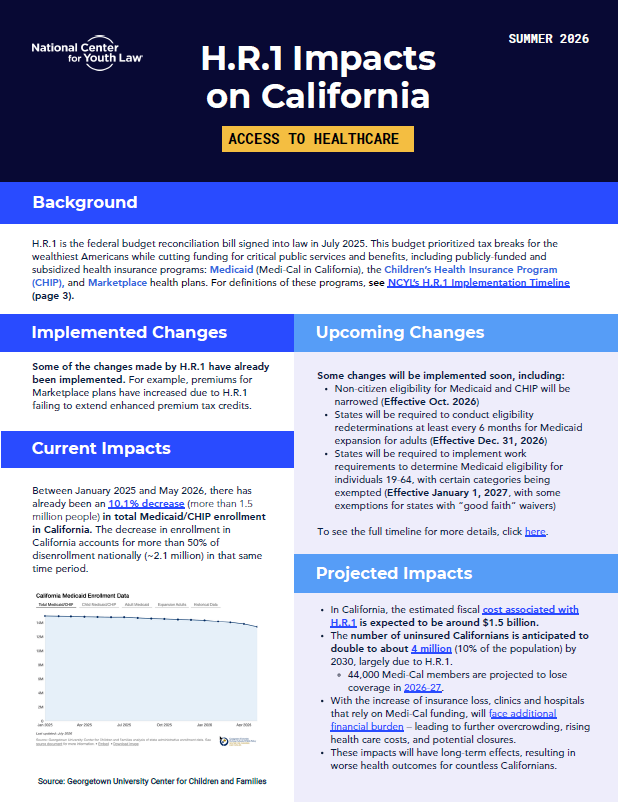
According to information shared by the National Center for Youth Law (NCYL) in its H.R. 1 Impacts on California: Access to Healthcare resource, California experienced a 10.1% decrease in Medicaid and Children's Health Insurance Program (CHIP) enrollment between January 2025 and May 2026, representing more than 1.5 million people.
The resource also highlights projections that California's uninsured population could reach approximately 4 million people by 2030, while clinics and hospitals that rely heavily on Medi-Cal funding may face additional financial pressures.
These figures illustrate why awareness, education, and coordinated community support are so important. While not every coverage loss can be attributed to a single cause, the possibility of additional barriers reinforces the need to help families understand their options and stay connected to available resources.
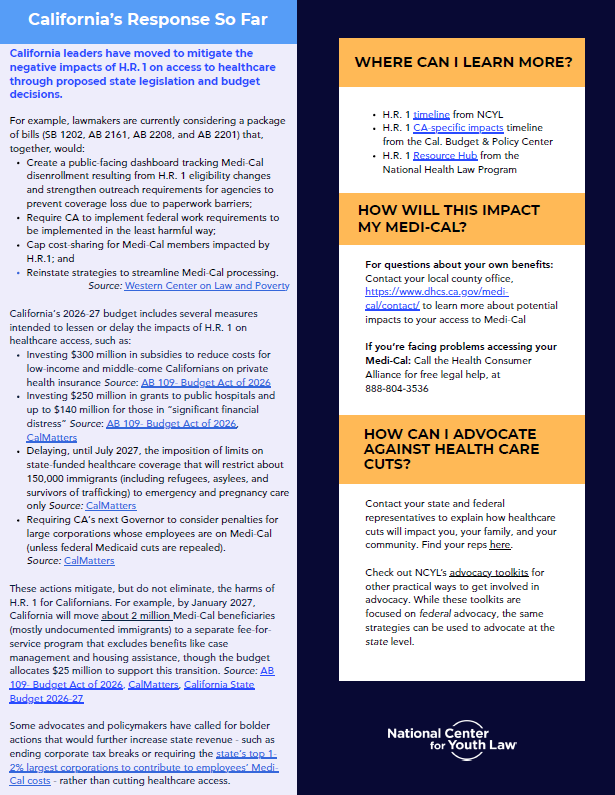
California has taken steps intended to lessen the impact of federal healthcare changes.
The NCYL resource highlights several efforts included in the state's 2026–27 budget, including $300 million in subsidies to help reduce private health insurance costs for eligible Californians, along with funding to support public hospitals facing financial challenges.
The resource also discusses state legislative proposals aimed at improving Medi-Cal outreach, simplifying eligibility processes, monitoring coverage losses, and reducing administrative barriers.
While these efforts may help protect access to care, they do not eliminate every challenge. This is why continued collaboration among healthcare providers, community organizations, government agencies, and service providers remains essential.
The good news is that there are practical steps families can take today to help prepare for these changes.
Remember, receiving a notice does not automatically mean someone will lose their Medi-Cal coverage. Understanding what the notice says and responding appropriately can make a meaningful difference.
This is where our commitment to collaboration becomes especially meaningful.
Across Penny Lane Centers, our teams work with individuals and families who may be directly affected by these changes. Whether we're providing mental health services, supporting families through our Community and Family Resource Centers, assisting transitional-age youth, or connecting clients with housing and other resources, we have opportunities to help individuals stay informed.
Sometimes, supporting a family may be as simple as reminding them to check their mail, helping them locate the appropriate county office, or connecting them with someone who can explain an unfamiliar notice.
Other times, it may involve working with community partners to identify additional resources, sharing updated information across departments, or helping families navigate the next steps toward maintaining their healthcare coverage.
No single department or organization can address every challenge alone. But by communicating, sharing resources, and working together, we can help reduce confusion, strengthen access to support, and ensure families know they are not navigating these changes by themselves.
The following resources can help staff and families learn more about upcoming Medi-Cal changes and find assistance when needed.
California Department of Health Care Services (DHCS)
Covered California
Health Consumer Alliance
At Penny Lane Centers, our mission goes beyond providing individual services. It's about strengthening families, building relationships, removing barriers, and creating a community where everyone has the opportunity to thrive. As Medi-Cal changes unfold, our ability to collaborate across programs, share reliable information, and connect families with knowledgeable partners will be more important than ever. We may not be able to control every policy change or eliminate every obstacle, but we can make sure the families we serve feel informed, supported, and connected to the resources available to them. Because sometimes, helping someone understand a letter, meet a deadline, or find the right resource can be the difference between losing access to care and continuing to receive the support they need.
Together, through communication, compassion, and collaboration, we can help our families navigate change with greater confidence and hope.
If you are interested in sharing your own stories of collaboration, please email Charito Guerrero at cguerrero@pennylane.org. We are always looking for opportunities to highlight the great work happening across our many programs.